

Hypertension and Your Heart, Brain and Kidneys: What Happens When Blood Pressure Stays High?
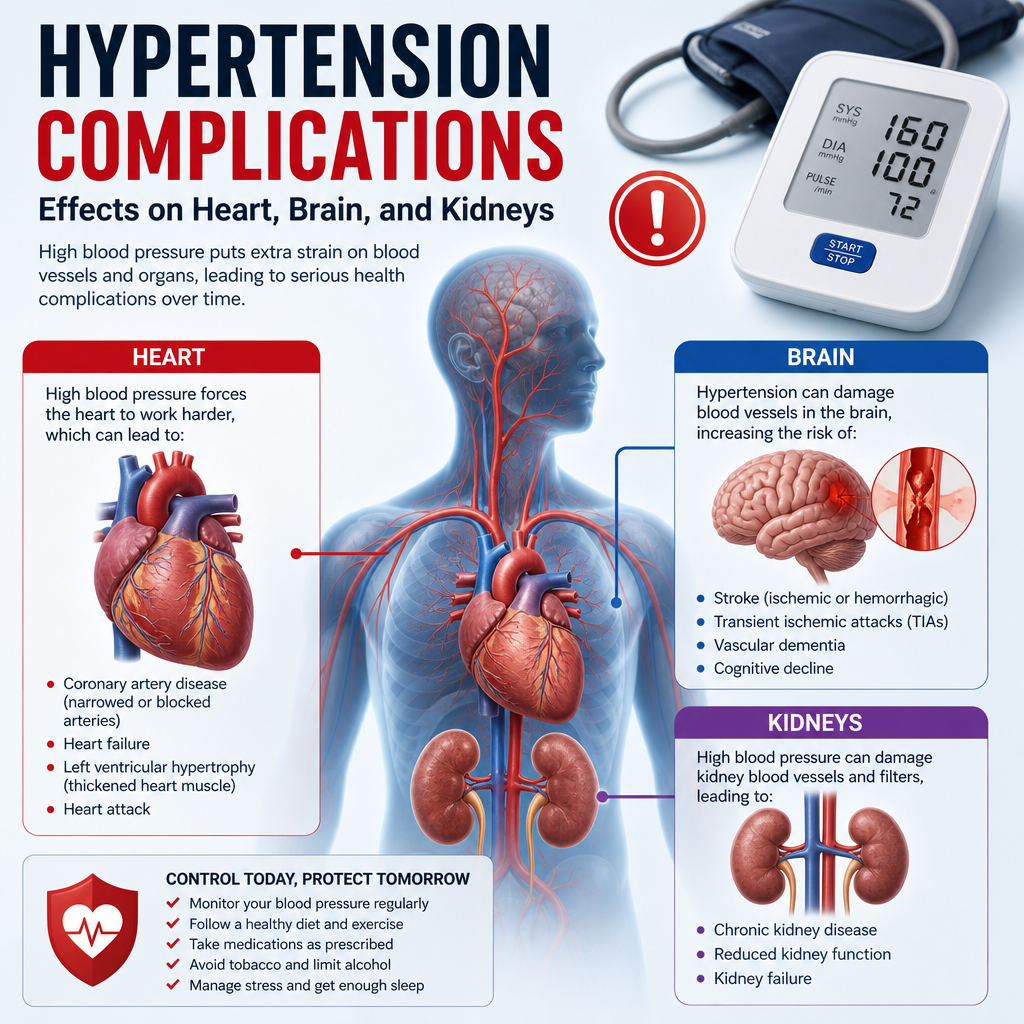
High blood pressure, also called hypertension, is often called the “silent killer” for a reason. It can develop without obvious symptoms, yet quietly damage major organs over time. When blood pressure stays high for months or years, the effects of high blood pressure can become serious, leading to lasting hypertension complications that affect the heart, brain, and kidneys.
Understanding these risks is one of the best ways to protect your health and prevent emergencies before they happen.
Why Persistent High Blood Pressure Is Dangerous
Blood pressure measures the force of blood pushing against artery walls. When this pressure remains too high, the arteries and organs are forced to work harder than they should. Over time, this strain can weaken blood vessels, reduce blood flow, and increase the risk of life-threatening disease.
This is why uncontrolled hypertension should never be ignored. Even if you feel fine, damage may already be happening inside the body.
How Hypertension Affects the Heart
The heart is one of the first organs affected by long-term high blood pressure. The heart has to pump against greater resistance, which makes it work harder and harder.
Common heart-related complications include:
- Thickening of the heart muscle, especially the left ventricle
- Heart failure, when the heart can no longer pump effectively
- Coronary artery disease, caused by narrowed arteries
- Heart attack, when blood flow to part of the heart is blocked
- Irregular heartbeat, which can increase stroke risk
This connection between hypertension and heart disease is one of the most important reasons to take blood pressure control seriously. Good heart health depends on keeping blood pressure in a safe range, especially if you already have other risk factors like diabetes, obesity, smoking, or a family history of cardiovascular disease.
How Hypertension Affects the Brain
Your brain needs a steady supply of oxygen-rich blood to function properly. High blood pressure damages the blood vessels that supply the brain, making them more likely to narrow, weaken, or burst.
Hypertension and stroke
One of the most serious high blood pressure complications is stroke. There are two main ways this can happen:
- Ischemic stroke: A clot blocks blood flow to part of the brain
- Hemorrhagic stroke: A weakened blood vessel bursts and causes bleeding
This is why hypertension and stroke are closely linked. People with untreated or poorly controlled blood pressure face a much higher risk of sudden brain injury, disability, or death.
Long-term hypertension can also contribute to memory problems and reduced thinking ability over time. Protecting the brain is a major part of stroke prevention and healthy aging.
How Hypertension Affects the Kidneys
The kidneys filter waste and extra fluid from the blood. To do this properly, they rely on a network of small blood vessels. High blood pressure damages these vessels, reducing blood flow and making it harder for the kidneys to work.
Hypertension and kidney disease
Over time, this can lead to hypertension and kidney disease. In some cases, kidney damage can start silently and only be discovered after significant loss of kidney function. Signs may include swelling, changes in urination, or abnormal lab results.
Kidney disease can also make blood pressure harder to control, creating a dangerous cycle. That is why protecting kidney health and controlling blood pressure go hand in hand.
Warning Signs You Should Not Ignore
Hypertension often has no symptoms, but when complications begin, warning signs may appear. These can include:
- Chest pain
- Shortness of breath
- Severe headache
- Sudden weakness or numbness
- Trouble speaking
- Vision changes
- Swelling in the legs or feet
- Reduced urination
If any of these symptoms occur, seek medical care immediately.
What You Can Do to Protect Your Health
The good news is that many of the dangers of high blood pressure can be reduced with early action. Managing hypertension is one of the most effective steps for protecting the heart, brain, and kidneys.
Helpful steps include:
- Check your blood pressure regularly
- Take prescribed medication as directed
- Reduce salt intake
- Eat more fruits, vegetables, and whole grains
- Stay physically active
- Avoid smoking
- Limit alcohol
- Manage stress and sleep well
- Keep regular medical appointments
For people living with high blood pressure Nigeria, access to routine screening and consistent follow-up is especially important. Many cases remain undiagnosed until complications develop. Public awareness, home monitoring, and timely treatment can save lives.
The Role of Medical Guidance
Managing hypertension is not something to do alone. A healthcare professional can help you understand your numbers, adjust treatment, and reduce your risk of complications. The Physicians often emphasize that blood pressure control is not just about treating a number—it is about preventing damage to vital organs and improving long-term quality of life.
Final Thoughts
High blood pressure may seem harmless at first, but the long-term consequences can be severe. From hypertension and heart disease to hypertension and stroke and hypertension and kidney disease, the body pays a heavy price when blood pressure stays high.
The best defense is early detection, consistent treatment, and healthy daily habits. Protecting your blood pressure means protecting your heart, brain, and kidneys—today and for years to come.
