

Understanding Hypertension, Diabetes, Cholesterol, Obesity, Heart Disease, and Prevention
Heart health is one of the most important parts of overall wellbeing. When people talk about cardiovascular health, they often mention hypertension, diabetes, cholesterol, obesity, and heart disease because these conditions are closely connected. They can develop silently, affect daily life for years, and increase the risk of serious complications if not managed early.
In Nigeria and many other countries, these conditions are becoming more common due to changes in diet, stress, reduced physical activity, and limited preventive healthcare. The good news is that many cases can be delayed, controlled, or prevented with a healthy lifestyle, regular screening, and better awareness.
What Is Cardiovascular Health?
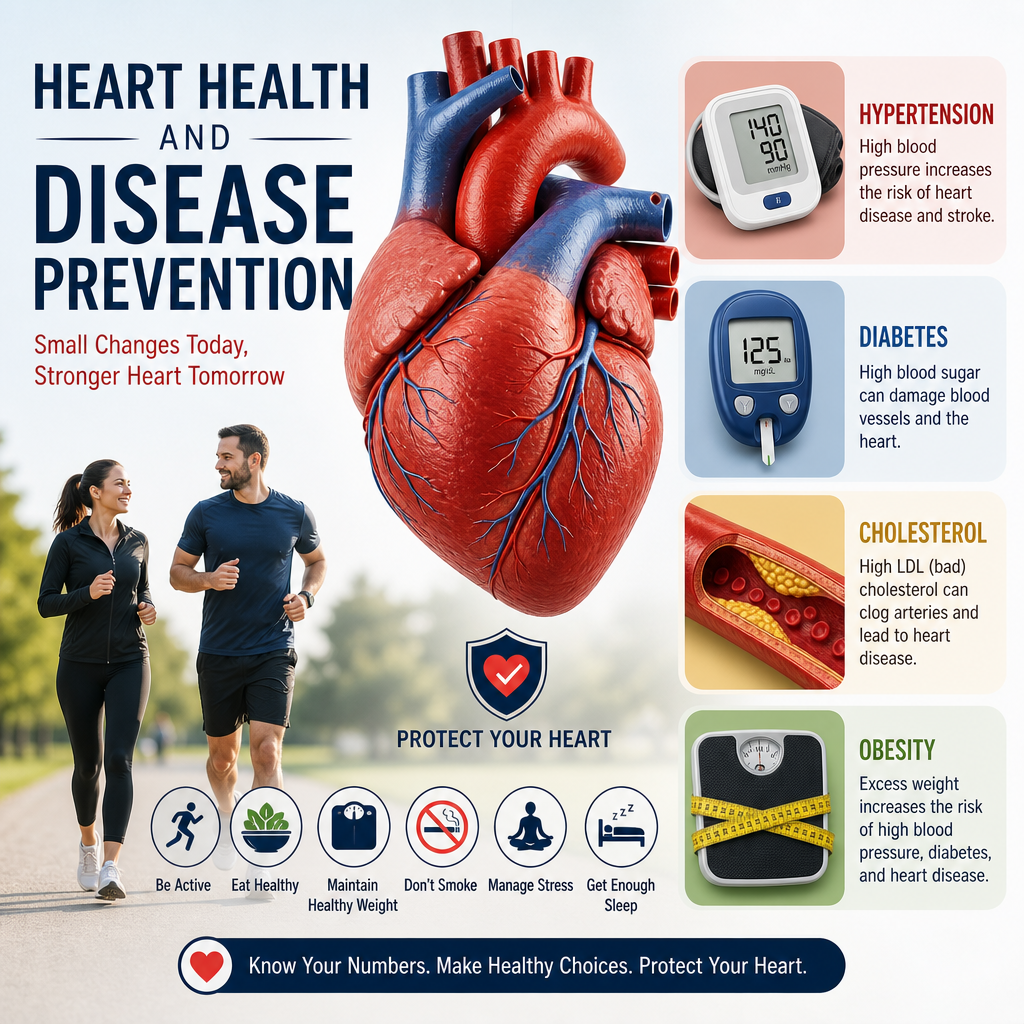
Cardiovascular health refers to how well the heart and blood vessels work. A healthy cardiovascular system pumps blood efficiently, delivers oxygen and nutrients to the body, and supports energy, brain function, and organ health.
When cardiovascular health begins to decline, conditions such as high blood pressure, high cholesterol, diabetes, obesity, and eventually heart disease may appear. These conditions often share similar risk factors, which is why disease prevention should focus on the whole lifestyle, not just one illness at a time.
Hypertension: The Silent Risk
Hypertension, also called high blood pressure, happens when the force of blood against the walls of the arteries is too high for a long period. It is one of the most common heart disease risk factors and can quietly damage the heart, kidneys, eyes, and brain.
Causes of High Blood Pressure
There is no single cause of hypertension in every person, but common causes of high blood pressure include:
- Too much salt in the diet
- Obesity and excess body weight
- Lack of exercise
- Stress and poor sleep
- Smoking and alcohol use
- Family history
- Aging
- Kidney problems and some medical conditions
In many cases, hypertension in Nigeria is linked to diet patterns that include excess salt, processed foods, and oily meals, along with low awareness and late diagnosis.
Symptoms of Hypertension
Many people do not notice any warning signs, which is why hypertension is often called the silent killer. Still, possible symptoms of hypertension may include:
- Headaches
- Dizziness
- Blurred vision
- Nosebleeds
- Shortness of breath
- Chest discomfort
These symptoms may also be caused by other conditions, so blood pressure checks are important for proper diagnosis.
How to Prevent Hypertension
Knowing how to prevent hypertension starts with simple lifestyle changes:
- Reduce salt intake
- Eat more fruits and vegetables
- Exercise regularly
- Maintain a healthy weight
- Limit alcohol
- Stop smoking
- Manage stress
- Sleep well
- Go for regular blood pressure checks
How to Lower Blood Pressure
For people already living with hypertension, how to lower blood pressure often includes:
- Taking prescribed medication consistently
- Following a healthy diet for hypertension
- Reducing salty and fried foods
- Losing excess weight
- Staying physically active
- Checking blood pressure regularly
A practical example is replacing instant noodles and salty snacks with beans, fruits, vegetables, and grilled fish. Small changes like this can support better heart health over time.
Diabetes: When Blood Sugar Stays Too High
Diabetes is a condition where the body cannot properly regulate blood sugar. This may happen because the body does not produce enough insulin or cannot use insulin effectively.
Uncontrolled diabetes can damage blood vessels and increase the risk of heart disease, stroke, kidney disease, and nerve problems. It is also closely linked to obesity and hypertension.
Causes of Diabetes
Common causes of diabetes and diabetes risk factors include:
- Family history
- Obesity and excess abdominal fat
- Poor diet
- Physical inactivity
- Age
- Previous gestational diabetes
- High blood pressure and metabolic problems
In many communities, diabetes in Nigeria is rising because of a mix of lifestyle changes and limited routine screening.
Early Signs of Diabetes
Some early signs of diabetes include:
- Frequent urination
- Excessive thirst
- Unexplained weight loss
- Tiredness
- Blurred vision
- Slow-healing wounds
- Frequent infections
These signs can be subtle, so anyone at risk should test blood sugar regularly.
How to Prevent Diabetes
To understand how to prevent diabetes, focus on habits that support stable blood sugar and metabolic health:
- Eat balanced meals
- Reduce sugary drinks and sweets
- Increase fiber intake
- Exercise regularly
- Lose excess weight if needed
- Avoid long periods of sitting
- Get regular medical checks
A healthy diet for diabetes may include brown rice in moderate portions, vegetables, beans, lean protein, nuts, and water instead of soft drinks.
Diabetes Prevention Nigeria
Diabetes prevention Nigeria efforts should include public education, routine screening, and healthier food choices at home, in schools, and in workplaces. Early detection matters because diabetes can develop slowly and remain unnoticed for a long time.
Cholesterol: Good and Bad Fat in the Blood
Cholesterol is a fatty substance the body needs in small amounts. However, high cholesterol can build up in the arteries and reduce blood flow. This increases the risk of heart disease and stroke.
Symptoms of High Cholesterol
High cholesterol often has no clear symptoms, which is why many people only discover it during a health check. Still, symptoms of high cholesterol may be seen indirectly when complications begin, such as chest pain or reduced circulation.
How to Lower Cholesterol
If you are looking for how to lower cholesterol, these steps can help:
- Eat less saturated and trans fat
- Choose fish, beans, and skinless poultry
- Add more soluble fiber from oats, vegetables, and fruits
- Exercise regularly
- Maintain a healthy weight
- Avoid smoking
- Follow medical advice if medication is needed
Examples of food swaps include using boiled or grilled meals instead of deep-fried options, and choosing fruit over pastries as a snack.
Cholesterol in Nigeria
Awareness of cholesterol in Nigeria is improving, but many people still do not test regularly. Since high cholesterol often has no symptoms, routine screening is one of the most important cardiovascular disease prevention strategies.
Obesity: More Than Body Weight
Obesity happens when excess body fat builds up to a level that harms health. It is not just about appearance; it is strongly linked to hypertension, diabetes, high cholesterol, and heart disease.
Causes of Obesity
The main causes of obesity include:
- Eating more calories than the body uses
- Frequent high-fat and high-sugar meals
- Low physical activity
- Poor sleep
- Stress
- Genetic factors
- Some medical conditions and medications
In modern lifestyles, long sitting hours, fast food, and sugary drinks make it easier to gain weight.
How to Prevent Obesity
Understanding how to prevent obesity means building a healthy routine:
- Eat portion-controlled meals
- Reduce sugary drinks
- Limit ultra-processed foods
- Move more every day
- Sleep enough
- Manage stress
- Monitor body weight regularly
A family that cooks more meals at home, takes daily walks, and reduces soft drinks is taking practical steps toward better cardiovascular health and healthy lifestyle habits.
Obesity in Nigeria
Obesity in Nigeria is becoming more visible in cities and towns where sedentary work and convenience foods are increasing. Prevention should begin early in childhood with better nutrition, active play, and healthy school meals.
Heart Disease: The Final Warning Sign
Heart disease is a broad term for conditions that affect the heart’s structure and function, including coronary artery disease, heart failure, and rhythm problems. It often develops from long-term exposure to heart disease risk factors such as hypertension, diabetes, obesity, smoking, and high cholesterol.
Signs of Heart Disease
Some signs of heart disease and early signs of heart disease may include:
- Chest pain or pressure
- Shortness of breath
- Fatigue during light activity
- Swelling in the legs or ankles
- Fast or irregular heartbeat
- Dizziness or fainting
- Pain in the neck, jaw, arm, or back
Not all symptoms appear the same way in every person. Some people ignore mild discomfort until the condition becomes severe. Early medical attention saves lives.
How to Prevent Heart Disease
Learning how to prevent heart disease involves protecting the whole body, not only the heart. Key steps include:
- Control blood pressure and blood sugar
- Lower cholesterol
- Stay at a healthy weight
- Exercise regularly
- Eat a heart-friendly diet
- Avoid tobacco
- Limit alcohol
- Manage stress
- Attend regular checkups
These are the foundation of heart disease prevention and broader cardiovascular disease prevention.
How These Conditions Are Connected
Hypertension, diabetes, cholesterol problems, obesity, and heart disease often occur together. A person with one condition is more likely to develop another if the root causes are not addressed.
For example:
- Obesity can lead to insulin resistance and diabetes.
- Diabetes can damage blood vessels and raise the risk of heart disease.
- High blood pressure can strain the heart and blood vessels.
- High cholesterol can narrow arteries and reduce blood flow.
This is why metabolic health matters. Good metabolic health means the body handles blood sugar, fat, and pressure more effectively. Improving one area often helps the others too.
Healthy Heart Tips for Everyday Life
Here are practical healthy heart tips and cardiovascular health tips anyone can start using:
1. Eat for the long term
Build meals around:
- Vegetables
- Fruits
- Beans
- Whole grains
- Fish
- Nuts and seeds
- Small portions of lean protein
Limit:
- Excess salt
- Sugary drinks
- Fried foods
- Highly processed snacks
- Trans fats
2. Move your body
Aim for regular physical activity such as:
- Brisk walking
- Cycling
- Dancing
- Gardening
- Climbing stairs
Even 30 minutes of movement most days can improve heart health and support hypertension prevention.
3. Check your numbers
Regular screening is a major part of preventive healthcare. Monitor:
- Blood pressure
- Blood sugar
- Cholesterol
- Weight and waist size
This is especially important for adults with family history or other risk factors.
4. Reduce stress
Chronic stress can affect eating habits, sleep, blood pressure, and blood sugar. Helpful habits include:
- Deep breathing
- Prayer or meditation
- Talking with trusted friends
- Resting properly
- Taking breaks from work pressure
5. Stop harmful habits
Smoking and heavy alcohol use increase the risk of heart disease, stroke, and other health problems. Avoiding them is one of the strongest actions for long-term health.
Heart Disease in Nigeria: Why Prevention Matters
Heart disease in Nigeria, along with high blood pressure in Nigeria, diabetes in Nigeria, and cardiovascular disease Nigeria, is a major public health concern. Many people only seek care after symptoms become severe. Others may not know they have hypertension, diabetes, or high cholesterol because routine screening is not common.
That is why prevention should be part of daily life, not something done only after sickness begins. Families, communities, schools, and workplaces all have a role in promoting better nutrition, physical activity, and regular health checks.
Conclusion
Hypertension, diabetes, high cholesterol, obesity, and heart disease are deeply connected, but they are also preventable and manageable. The most effective approach to heart disease prevention and cardiovascular disease prevention is to act early: eat better, move more, reduce stress, maintain a healthy weight, and get regular screenings.
Protecting heart health is really about protecting the whole body. With consistent healthy lifestyle choices and early preventive care, it is possible to reduce risk, live better, and support stronger cardiovascular health for years to come.
