

Dry Eyes: Common Causes, Warning Signs and When to See a Doctor
Dry eyes are more than a minor annoyance. They can make reading, driving, working on a screen, or even being outdoors uncomfortable. Many people ignore the early signs, but dry eye syndrome can affect daily life and sometimes point to a deeper health issue.
Understanding the causes of dry eyes, recognizing warning signs like burning eyes or gritty eyes, and knowing when to seek help can protect your eye health and support better long-term vision health.
What Are Dry Eyes?
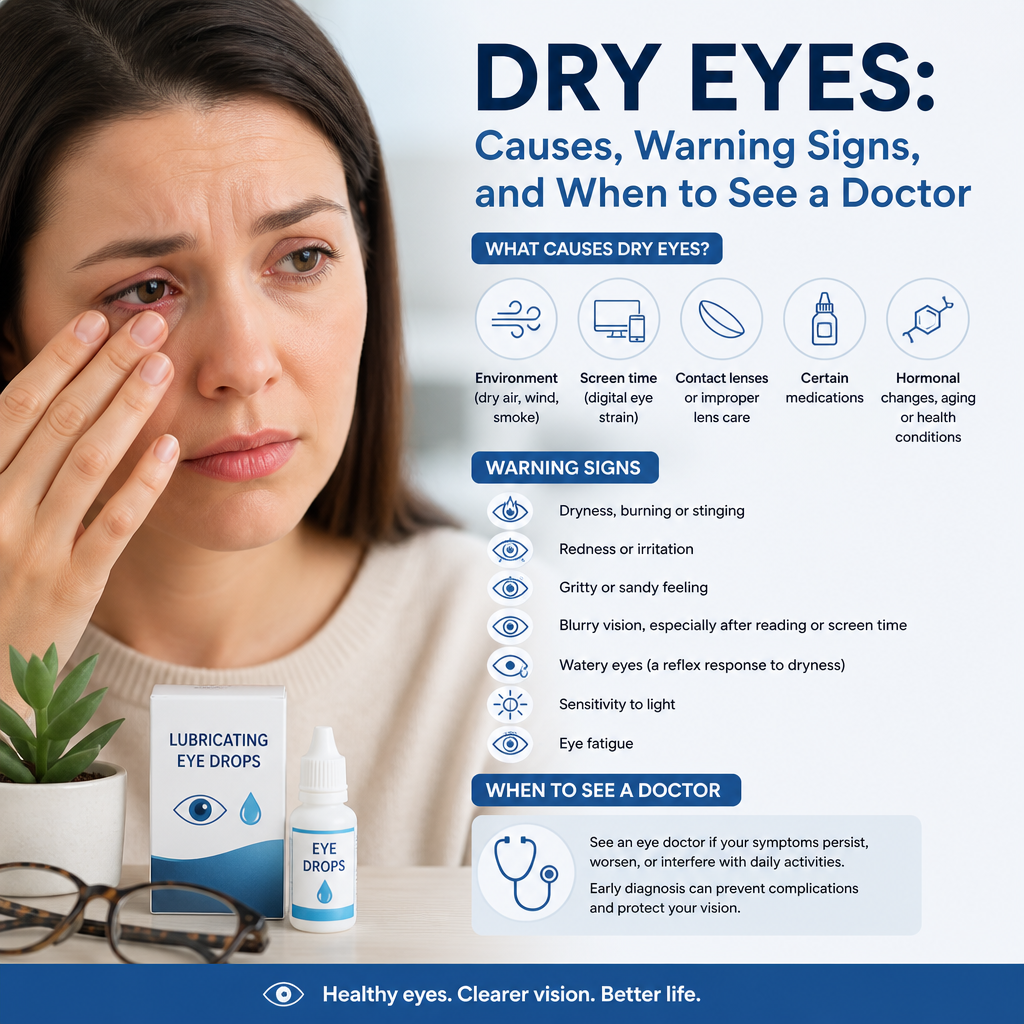
Dry eyes happen when your eyes do not make enough tears, or when the tears they produce are not of good quality. Tears are important because they keep the eye surface moist, smooth, and protected.
When tears are inadequate, the eyes may become irritated, inflamed, or even damaged over time. This condition is commonly called dry eye syndrome.
Common Causes of Dry Eyes
There are many possible causes of dry eyes, and some are simple while others are linked to medical conditions.
1. Aging
As people get older, tear production may naturally decrease. Dry eyes are more common in older adults, especially women after menopause.
2. Screen Time
Long hours on phones, tablets, or computers can reduce blinking. Fewer blinks mean less moisture on the eyes, which often leads to eye strain and discomfort.
3. Environmental Factors
Wind, smoke, dust, air conditioning, and dry weather can all worsen dry eyes. In hot or dusty environments, symptoms may feel stronger.
4. Contact Lens Use
Wearing contact lenses for too long can irritate the eye surface and contribute to dry eyes.
5. Medications
Some medicines may reduce tear production, including:
- Antihistamines
- Decongestants
- Certain blood pressure medicines
- Antidepressants
- Acne treatments
6. Health Conditions
Some illnesses affect tear glands or the eye surface. A major example is Sjögren’s syndrome, also written as Sjogren syndrome, an autoimmune disease that often causes dry eyes and dry mouth.
Other conditions that can contribute include diabetes, thyroid disorders, rheumatoid arthritis, and eyelid problems.
Warning Signs You Should Not Ignore
Dry eyes may start mildly, but the symptoms can become persistent. Common warning signs include:
- Burning eyes
- Gritty eyes or a feeling that sand is in the eye
- Stinging or itching
- Redness
- Blurry vision that comes and goes
- Sensitivity to light
- Trouble wearing contact lenses
- Watery eyes, which may sound surprising but can happen when the eyes are irritated
If these symptoms keep returning, you may be dealing with persistent dry eyes rather than temporary irritation.
When Dry Eyes May Signal Something More Serious
Occasional dryness may improve with rest or simple care. But if dry eyes happen often, last for weeks, or affect both eyes regularly, it may be more than a small problem.
You should also pay attention if dry eyes come with:
- Joint pain
- Dry mouth
- Swollen glands
- Fatigue
- Skin or mouth irritation
These may point to an autoimmune condition like Sjögren’s syndrome. In such cases, treating only the eye symptoms is not enough. A doctor may need to check for the underlying cause.
How Dry Eyes Affect Daily Life
Dry eyes can interfere with normal routines in many ways. Reading may become tiring. Driving at night may feel unsafe. Long screen use may trigger discomfort. In severe cases, the condition can affect work and reduce quality of life.
That is why good eye care Nigeria and wider eye health Nigeria awareness matter. Many people think eye irritation is normal, but recurring symptoms should not be dismissed. Protecting healthy eyes starts with noticing changes early.
Simple Ways to Ease Dry Eyes
While you should see a doctor for ongoing symptoms, some habits may help reduce discomfort:
- Take regular breaks during screen time
- Blink more often
- Avoid smoke and dust when possible
- Use a humidifier in dry rooms
- Drink enough water
- Wear sunglasses outdoors to protect against wind
- Follow your doctor’s instructions if you use contact lenses
Artificial tears may also help, but not all eye drops are the same. It is best to choose the right one with medical guidance, especially if symptoms are frequent.
When to See a Doctor
See an eye doctor if you have persistent dry eyes that do not improve with simple measures. You should also seek medical care if you have:
- Eye pain
- Sudden vision changes
- Severe redness
- Light sensitivity
- Thick eye discharge
- Ongoing symptoms in only one eye
- Dry eyes along with dry mouth or other body symptoms
A doctor can check whether the problem is due to dry eye syndrome, an infection, inflammation, or another eye problem. Early diagnosis helps protect your sight and prevent complications.
Taking Dry Eyes Seriously
Dry eyes may seem minor at first, but they can be a sign of real eye problems. With the right care, most people can manage symptoms and protect their vision health. The key is not to ignore warning signs such as burning eyes, gritty eyes, or symptoms that keep coming back.
If dryness is persistent or linked with dry eyes and dry mouth, medical evaluation is especially important. Trusted professionals like The Physicians can help identify the cause and guide proper treatment.
Healthy eyes deserve attention. If your eyes are telling you something is wrong, listen early and act before the problem gets worse.
