



Sjögren’s Syndrome: 7 Symptoms You Shouldn’t Ignore
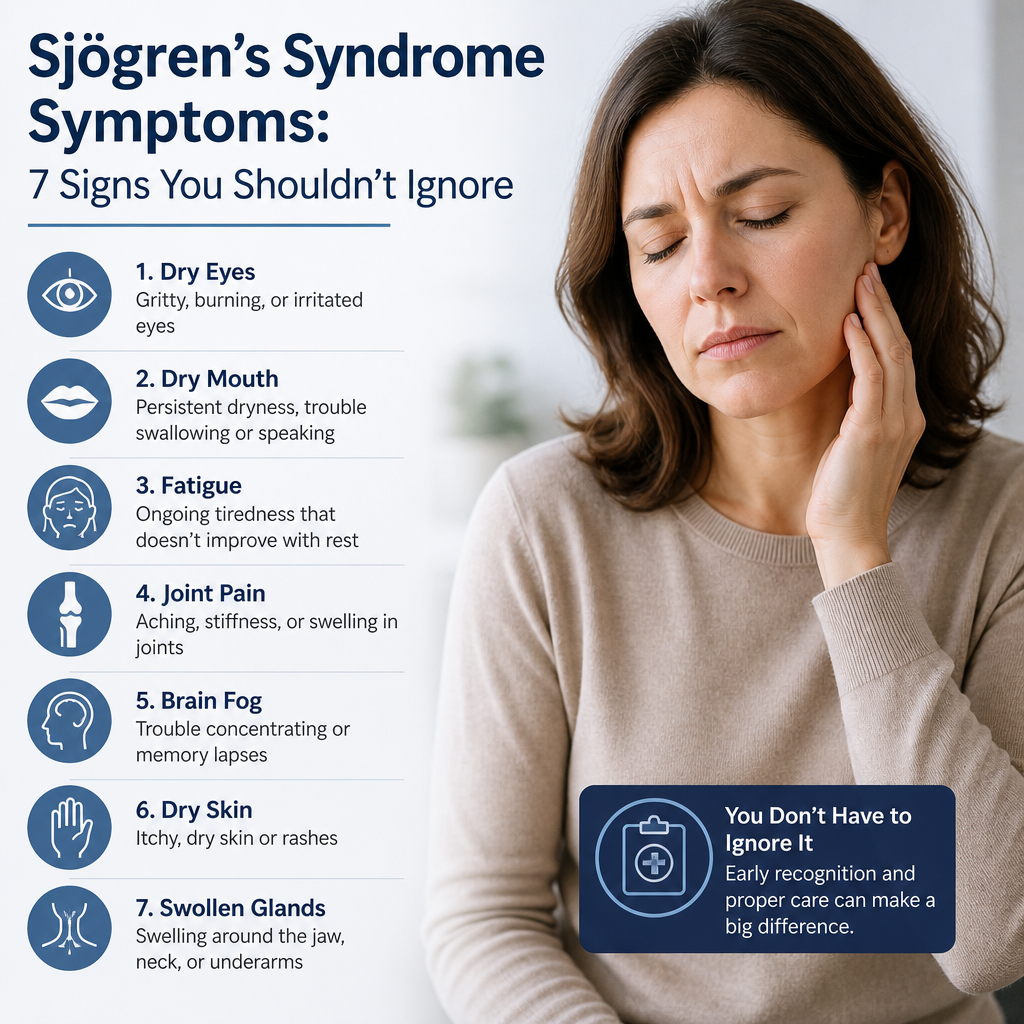
Sjögren’s syndrome is an autoimmune disorder that often goes unnoticed in its early stages. It can cause a range of uncomfortable problems, especially dry eyes and dry mouth, but many people do not realize these are connected to a deeper health issue. Because the condition can affect different parts of the body, recognizing the early Sjögren’s syndrome symptoms matters.
For people seeking trusted medical information Nigeria and broader health awareness Nigeria, understanding the warning signs can help support earlier diagnosis and treatment. Here are seven symptoms of Sjögren’s syndrome you should not ignore.
1. Persistent Dry Eyes
One of the most common signs of Sjögren’s syndrome is ongoing eye dryness. This is more than occasional irritation from dust or screen use.
You may notice:
- A burning or stinging feeling
- Red or itchy eyes
- Blurry vision that comes and goes
- A gritty feeling, as if something is in your eye
These chronic dry eyes can become painful and may affect reading, driving, or working on a computer. If eye drops offer only temporary relief, it may be worth discussing with a healthcare professional.
2. Constant Dry Mouth
Another key symptom is chronic dry mouth, also called xerostomia. This happens when the glands that make saliva do not work properly.
Common complaints include:
- Difficulty swallowing dry food
- A sticky or swollen feeling in the mouth
- Trouble speaking for long periods
- Increased thirst, especially at night
Dry mouth is one of the classic Sjögren’s syndrome signs, and it can lead to tooth decay, gum problems, and mouth infections if left untreated.
3. Fatigue That Doesn’t Improve with Rest
Fatigue is one of the most overlooked autoimmune disease symptoms. With Sjögren’s syndrome, the tiredness can feel deep, persistent, and unrelated to how much sleep you get.
This is not ordinary exhaustion. It may show up as:
- Low energy throughout the day
- Needing frequent naps
- Difficulty concentrating
- Feeling drained after small tasks
Many people with Sjögren’s disease describe this as one of the most frustrating symptoms because it can interfere with work, family life, and mental focus.
4. Joint Pain and Stiffness
Joint pain is another symptom that should not be ignored. It may affect the hands, wrists, knees, or other joints, and it can come and go.
You might experience:
- Morning stiffness
- Mild swelling
- Aching or soreness in multiple joints
- Reduced flexibility
Because joint pain is common in many autoimmune disorders, it may not immediately point to Sjögren’s syndrome. But when it appears alongside dry eyes or dry mouth, it becomes an important clue.
5. Swollen Salivary Glands
Some people with Sjögren’s syndrome develop swelling in the glands near the jaw or around the face. These glands help produce saliva, so inflammation in this area is another warning sign.
Look for:
- Puffy cheeks or swelling below the jaw
- Tenderness near the ears
- Recurrent gland discomfort
- A feeling of fullness in the mouth or face
This symptom may come and go, but it should not be ignored, especially if other autoimmune disease symptoms are present.
6. Dry Skin and Vaginal Dryness
Sjögren’s syndrome does not only affect the eyes and mouth. It can also cause dryness in other areas of the body.
Possible symptoms include:
- Rough, itchy, or flaky skin
- Vaginal dryness
- Discomfort during intimacy
- Irritation in sensitive areas
These symptoms are often dismissed or attributed to aging, stress, or hormones. However, they can also be part of the broader picture of Sjögren’s syndrome symptoms.
7. Frequent Cough, Hoarseness, or Trouble Swallowing
A dry throat and reduced saliva can affect the voice and swallowing. Some people also develop a persistent dry cough that does not seem linked to a cold or infection.
Watch for:
- Hoarse voice
- Repeated throat clearing
- Coughing without mucus
- Difficulty swallowing dry foods
These signs of Sjögren’s syndrome may seem minor at first, but they can become more disruptive over time. They may also affect sleep and daily comfort.
Why Early Recognition Matters
Sjögren’s syndrome is often missed because its symptoms can look like everyday problems. Dry eyes may seem like screen strain. Dry mouth may seem like dehydration. Fatigue may be blamed on stress.
But when several symptoms happen together, especially in combination with joint pain or swelling, they may point to an underlying autoimmune condition. Early diagnosis can help reduce complications and improve quality of life.
When to Seek Medical Advice
If you have ongoing dry eyes, dry mouth, unexplained fatigue, or joint pain, speak with a doctor. It is especially important to seek care if symptoms are lasting, worsening, or affecting your daily activities.
A healthcare provider may ask about your symptoms, examine your eyes and mouth, and recommend tests to check for autoimmune activity. Getting evaluated early can make a meaningful difference.
Final Thoughts
The most common Sjögren’s syndrome signs are easy to overlook, but they should not be ignored. Chronic dry eyes, chronic dry mouth, fatigue, and joint pain are all important warning signs, especially when they occur together. By paying attention to these autoimmune disease symptoms, you can take a proactive step toward better health and timely care.
For anyone following medical information Nigeria or looking to support health awareness Nigeria, understanding Sjogren syndrome symptoms is a valuable part of protecting long-term wellness.