


High Blood Pressure: 10 Risk Factors You Should Know
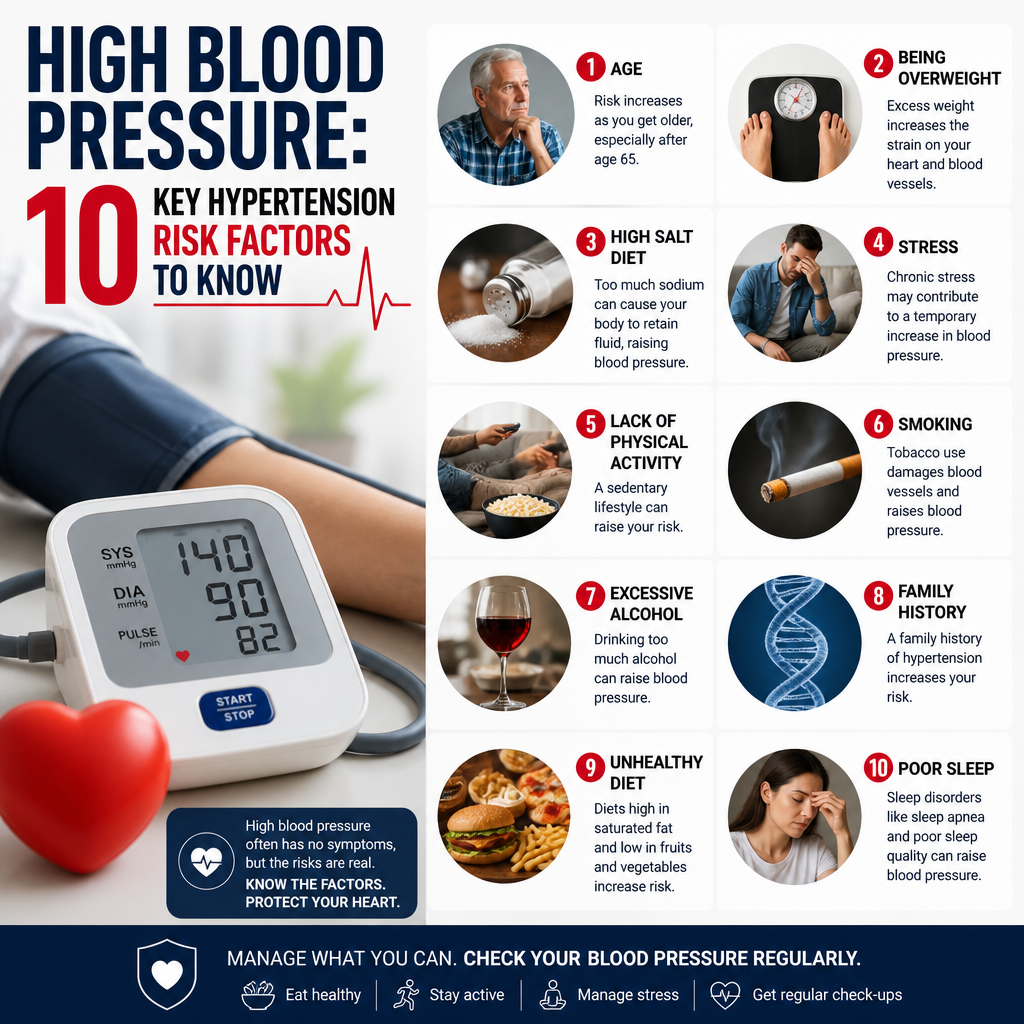
High blood pressure, also called hypertension, is one of the most common health conditions affecting adults worldwide. It often develops quietly, without obvious symptoms, which is why many people do not realize they have it until a routine checkup reveals a problem. Understanding the hypertension risk factors can help you make better choices and protect your heart health.
In this post, we’ll look at 10 important high blood pressure risk factors and why they matter.
What Is Hypertension?
Hypertension happens when the force of blood against your artery walls stays too high for too long. Over time, this can strain the heart and damage blood vessels, increasing the risk of heart disease, stroke, kidney problems, and other serious complications.
Many causes of hypertension are linked to lifestyle, while others are related to genetics or medical conditions. Some factors can be changed, while others cannot. Knowing the difference is the first step toward prevention.
1. Family History of Hypertension
A family history of hypertension is one of the strongest risk factors. If your parents or siblings have high blood pressure, your chances of developing it may be higher too.
This does not mean hypertension is unavoidable, but it does mean you should monitor your blood pressure regularly and take prevention seriously.
2. Obesity
Obesity and hypertension are closely connected. Carrying extra body weight makes the heart work harder to pump blood through the body. It can also affect hormones and increase stress on the blood vessels.
Even modest weight loss can improve blood pressure levels. Eating well and staying active can make a big difference.
3. High Salt Diet
A high salt diet is another major contributor to hypertension. Too much sodium causes the body to hold on to water, which increases blood volume and raises blood pressure.
Processed foods, instant noodles, canned meals, seasoning cubes, and salty snacks are common sources of excess sodium. Reducing salt intake is one of the simplest ways to support healthy blood pressure.
4. Physical Inactivity
Physical inactivity can weaken the heart and make it less efficient at pumping blood. A sedentary lifestyle also increases the risk of weight gain, stress, and poor circulation.
Regular movement helps keep blood vessels flexible and supports healthy blood pressure. Even simple activities like brisk walking, dancing, cycling, or gardening can help.
5. Unhealthy Diet
Beyond salt, an overall poor diet can contribute to high blood pressure. Diets high in saturated fat, sugar, and processed foods can lead to weight gain and raise the risk of cardiovascular problems.
A heart-friendly diet should include:
- Fruits and vegetables
- Whole grains
- Lean proteins
- Beans and legumes
- Nuts and seeds
Eating more fresh foods and fewer processed items can support long-term heart health.
6. Stress
Chronic stress may not directly cause hypertension in every case, but it can contribute to unhealthy habits that raise blood pressure. People under stress may overeat, smoke, sleep poorly, or drink more alcohol.
Managing stress through rest, prayer, deep breathing, exercise, or counseling can help protect both the mind and body.
7. Smoking
Smoking damages blood vessels and reduces oxygen in the blood. It also increases the workload on the heart and can make hypertension more dangerous.
If you smoke, quitting is one of the best steps you can take for your heart. The benefits begin quickly and continue over time.
8. Excess Alcohol Use
Drinking too much alcohol can raise blood pressure and weaken the heart over time. It may also interfere with medications used to treat hypertension.
If you drink alcohol, moderation is important. Limiting intake can reduce your risk and help keep your blood pressure under control.
9. Age and Gender
As people get older, blood vessels naturally become less flexible, which can increase the risk of hypertension. Men are often at higher risk earlier in life, while women may face a greater risk after menopause.
Age is not something you can change, but it is a reminder to check blood pressure regularly as you grow older.
10. Existing Health Conditions
Certain medical conditions can increase the risk of high blood pressure, including:
- Diabetes
- Kidney disease
- Sleep apnea
- Thyroid disorders
These conditions can affect how the body regulates blood pressure. If you already live with one of these health problems, regular monitoring is especially important.
Hypertension in Nigeria: Why Awareness Matters
Hypertension in Nigeria is a growing public health concern. Many people do not know they have high blood pressure until complications occur. Factors such as stress, dietary habits, limited exercise, and delayed screening can make the problem worse.
This is why awareness, early testing, and lifestyle changes are so important. Regular blood pressure checks should be part of routine care for adults, especially those with known risk factors.
Take Action for Better Heart Health
Knowing the high blood pressure risk factors gives you the power to act early. While you cannot change your family history or age, you can improve many other risk factors through healthier choices.
Here are a few simple steps to start with:
- Check your blood pressure regularly
- Reduce salt and processed foods
- Stay physically active
- Maintain a healthy weight
- Avoid smoking
- Limit alcohol
- Manage stress
- Follow your doctor’s advice
If you are concerned about your blood pressure, speak with a healthcare professional. The Physicians can help you understand your risks, monitor your numbers, and create a plan that supports long-term health.
Hypertension is serious, but with the right knowledge and action, it can often be managed or prevented.