



Is Your Dry Mouth More Than Dehydration? What You Should Know
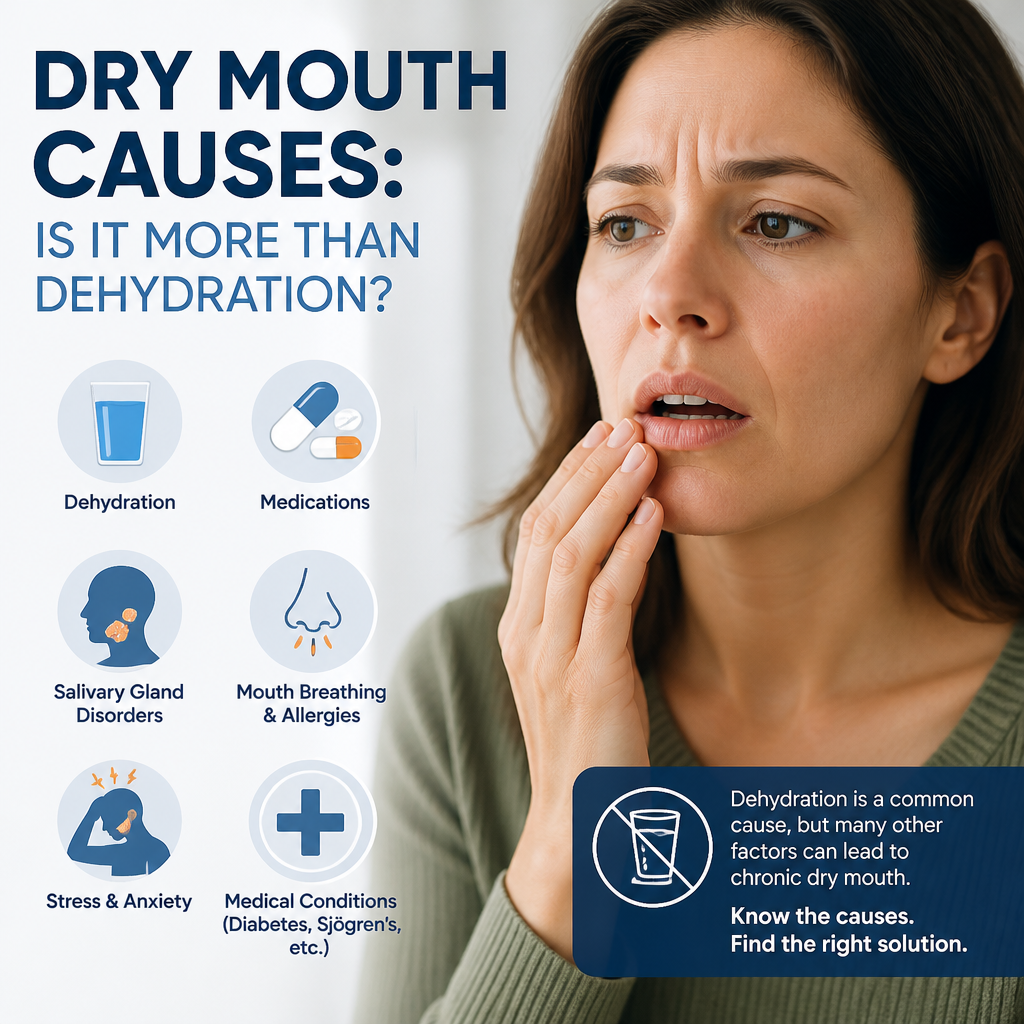
A dry mouth can happen to anyone, especially after a long day in the sun, a fever, or a night of sleeping with your mouth open. In many cases, it is linked to dry mouth and dehydration and improves when you drink enough water. But when the problem keeps coming back, or does not go away, it may be a sign of something more serious.
Persistent dry mouth is not just uncomfortable. It can affect speaking, chewing, swallowing, taste, and your overall oral health. It may also point to certain medicines, lifestyle habits, or medical conditions that need attention.
What Is Dry Mouth?
Dry mouth, also called xerostomia, happens when your mouth does not make enough saliva. Saliva is more important than many people realize. It helps wash away food particles, protect teeth, make swallowing easier, and keep the mouth tissues healthy.
When saliva production drops, you may notice:
- A sticky or dry feeling in the mouth
- Trouble swallowing dry foods
- Cracked lips or a dry tongue
- Bad breath
- A burning feeling in the mouth
- Changes in taste
- More cavities or gum problems
A dry mouth now and then may not be a big issue. But if it becomes frequent, it is worth finding out the causes of dry mouth.
Common Causes of Dry Mouth
There are many possible dry mouth causes, and dehydration is only one of them. Some of the most common include:
1. Dehydration
Not drinking enough fluids is one of the simplest reasons for dry mouth and dehydration. Heat, sweating, diarrhea, vomiting, and illness can all reduce body fluids and leave your mouth feeling dry.
2. Medications
Many common medicines can reduce saliva flow. These include drugs for:
- High blood pressure
- Depression
- Allergies
- Anxiety
- Pain
- Parkinson’s disease
3. Mouth breathing
Sleeping with your mouth open or breathing through the mouth during the day can dry out the tissues inside the mouth.
4. Tobacco, alcohol, and caffeine
Smoking and alcohol can irritate the mouth and reduce moisture. Too much caffeine may also contribute to dryness in some people.
5. Medical conditions
Certain conditions can affect the glands that produce saliva. These may include diabetes, nerve disorders, and some infections.
6. Autoimmune disease
Some dry mouth causes are linked to the immune system attacking healthy tissues. This is common in Sjögren’s syndrome, an autoimmune disease that often affects the eyes and mouth.
When Dry Mouth May Be a Warning Sign
If your mouth only feels dry once in a while, dehydration may be the reason. But if you have persistent dry mouth, especially with other symptoms, it may be time to look deeper.
Pay attention if you also notice:
- Dry eyes
- Joint pain
- Fatigue
- Swollen salivary glands
- Frequent tooth decay
- Difficulty swallowing
- Mouth sores
These can be part of Sjögren’s syndrome or another condition. People often search for Sjogren syndrome symptoms when they have dry mouth combined with eye discomfort and tiredness. Because the symptoms can be subtle at first, many people mistake them for stress, aging, or simple dehydration.
Why Saliva Matters for Oral Health
Low saliva affects more than comfort. It can raise the risk of tooth decay, gum disease, and mouth infections. Without enough saliva, bacteria can grow more easily and acids can stay on the teeth longer.
That is why ongoing dry mouth can become a dental problem, not just a nuisance. Protecting your oral health means paying attention to changes in saliva and getting help early if needed.
For people focused on dental health Nigeria, this is especially important. In hot weather or during busy days, many people assume dry mouth is minor and ignore it. But if the problem keeps happening, it can lead to more expensive treatment later.
What You Can Do About Dry Mouth
The right dry mouth treatment depends on the cause. Still, there are simple steps that may help ease symptoms and protect your mouth:
- Sip water regularly throughout the day
- Avoid tobacco and limit alcohol
- Cut down on sugary drinks
- Chew sugar-free gum to stimulate saliva
- Use a humidifier at night if the air is dry
- Breathe through your nose when possible
- Brush twice daily with fluoride toothpaste
- Visit a dentist regularly
If a medication seems to be causing your dry mouth, do not stop it on your own. A doctor may be able to adjust the dose or suggest another option.
For severe cases, a healthcare provider may recommend prescription treatments or special saliva substitutes. If an autoimmune disease is involved, treating the underlying condition is key.
When to See a Doctor or Dentist
You should seek medical or dental advice if:
- Your dry mouth lasts more than a few weeks
- You have trouble swallowing or speaking
- Your mouth feels dry even when you drink enough water
- You notice dry eyes, joint pain, or fatigue
- You are getting frequent cavities
- You suspect Sjögren’s syndrome or another health issue
A dentist or doctor can help identify the dry mouth causes and decide whether tests are needed. Early care can protect both your comfort and your teeth.
A Final Note for Everyday Health
Dry mouth is common, but it should not always be blamed on dehydration. If it keeps coming back, your body may be trying to tell you something. Understanding the difference between occasional xerostomia and persistent dry mouth can help you protect your smile and overall health.
For practical health tips Nigeria residents can use, start with hydration, healthy habits, and regular dental visits. And if symptoms continue, speak with The Physicians or a qualified dental professional so you can get the right diagnosis and dry mouth treatment before small symptoms become bigger problems.