



What Causes High Blood Pressure? Common Causes and Lifestyle Factors
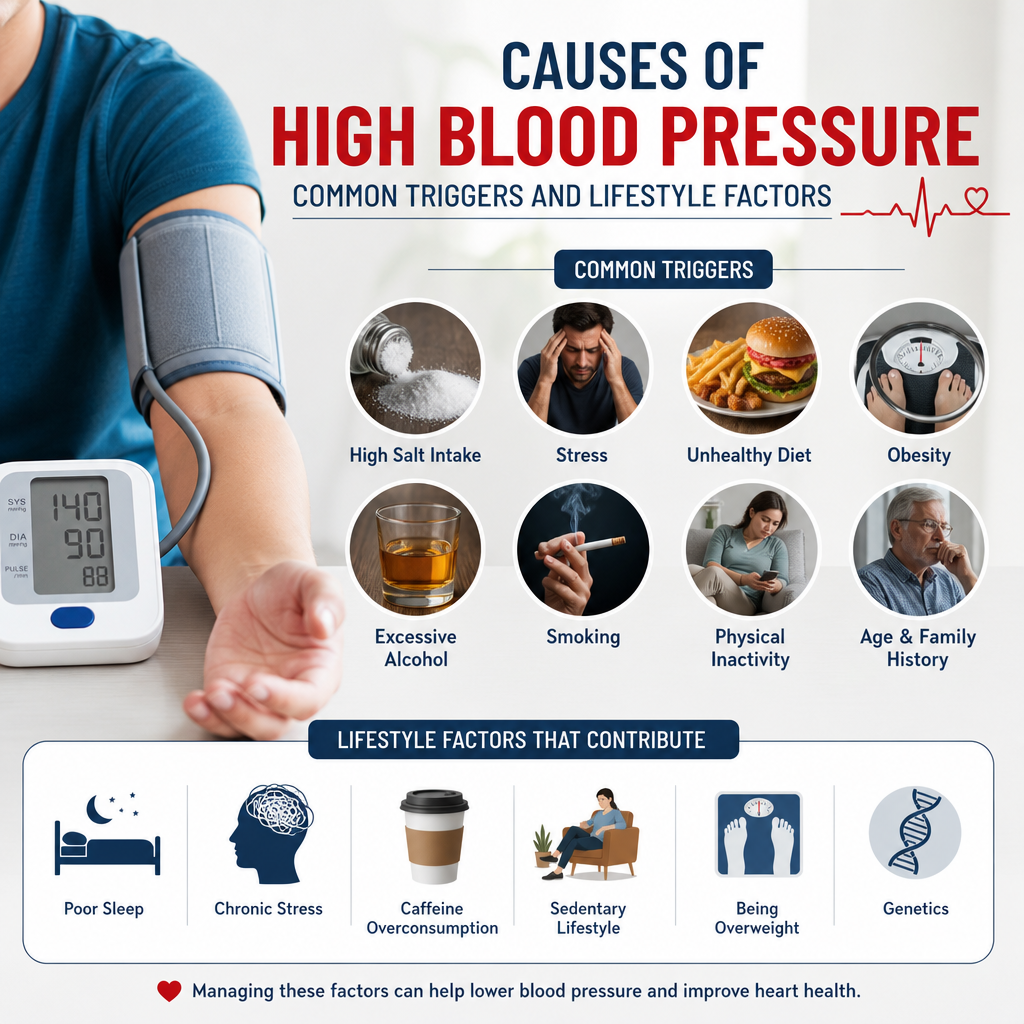
High blood pressure, also called hypertension, is one of the most common health conditions in the world. It often develops quietly, without obvious symptoms, which is why many people do not realize they have it until it is measured during a checkup. Understanding the causes of high blood pressure can help you take steps to lower your risk and protect your heart, brain, and kidneys.
While some people develop hypertension because of age or genetics, many cases are strongly linked to daily habits and lifestyle choices. The good news is that several of the most important hypertension causes can be managed.
What Is High Blood Pressure?
Blood pressure is the force of blood pushing against the walls of your arteries. When this pressure stays too high for too long, the heart has to work harder, and the arteries can become damaged over time.
High blood pressure may be influenced by many factors, including:
- family history
- age
- diet
- physical activity
- body weight
- stress
- smoking
- alcohol use
- other medical conditions
Some causes cannot be changed, but many can be improved with healthier habits.
Common Causes of High Blood Pressure
1. Too Much Salt in the Diet
One of the most well-known causes of high blood pressure is excess sodium. Salt and blood pressure are closely connected because sodium makes the body retain more fluid. That extra fluid increases pressure inside the blood vessels.
Processed foods, fast food, canned soups, frozen meals, and salty snacks are often the biggest sources of sodium. Even foods that do not taste very salty can contain a surprising amount.
2. Obesity and Extra Body Weight
Obesity and high blood pressure are strongly linked. Carrying excess weight increases the strain on the heart and can affect how the body regulates blood flow and hormones.
People with extra body weight are more likely to develop hypertension, especially if they also have poor diet, low activity levels, or sleep problems. Even modest weight loss can help reduce blood pressure.
3. Lack of Physical Activity
A sedentary lifestyle is another major factor. Regular exercise helps the heart pump blood more efficiently and keeps blood vessels flexible. Without enough activity, the heart works harder and blood pressure may rise.
Walking, cycling, swimming, and other aerobic exercises can all support hypertension prevention.
4. Alcohol Use
There is a strong connection between alcohol and hypertension. Drinking too much alcohol can raise blood pressure over time and may also reduce the effectiveness of blood pressure medications.
Heavy drinking can contribute to weight gain, poor sleep, and higher stress levels, all of which can make hypertension worse.
5. Smoking
Smoking and hypertension are a dangerous combination. Smoking causes a temporary rise in blood pressure and heart rate each time a cigarette is smoked. Over time, smoking damages blood vessels and increases the risk of heart disease and stroke.
Even people who do not currently have high blood pressure can raise their risk significantly by smoking.
6. Chronic Stress
Stress and blood pressure are connected in both direct and indirect ways. During stressful moments, blood pressure can rise temporarily. But long-term stress may also lead to unhealthy habits such as overeating, drinking more alcohol, sleeping poorly, or avoiding exercise.
Stress does not always cause permanent hypertension on its own, but it can make it harder to control.
Other Factors That Can Raise Blood Pressure
In addition to lifestyle factors, some medical and biological conditions can contribute to high blood pressure:
- aging
- family history
- kidney disease
- diabetes
- sleep apnea
- hormone disorders
- certain medications
These are important causes of hypertension that should be discussed with a healthcare professional, especially if blood pressure stays high despite healthy habits.
How Lifestyle Changes Help
Many people can lower their blood pressure by making steady changes over time. Helpful steps include:
- eating less sodium
- choosing more fruits, vegetables, and whole grains
- exercising regularly
- maintaining a healthy weight
- limiting alcohol
- quitting smoking
- managing stress
- getting enough sleep
These changes can make a meaningful difference, especially when started early. Hypertension prevention is often easier than trying to reverse long-term damage later.
When to Talk to a Doctor
If you have a family history of hypertension, are overweight, smoke, drink heavily, or live with high stress, it is wise to monitor your blood pressure regularly. A healthcare provider can help identify the likely causes of high blood pressure and create a plan that fits your needs.
As The Physicians often emphasize, blood pressure is not just a number—it is a signal about your overall health. Early attention can prevent serious complications later.
Conclusion
The main causes of high blood pressure often come down to a mix of lifestyle habits, genetics, and other health conditions. Too much salt, excess weight, lack of exercise, alcohol, smoking, and chronic stress all play a role in raising risk.
By understanding the most common hypertension causes, you can take practical steps toward better heart health. Small changes today can support lifelong hypertension prevention and help keep your blood pressure under control.