



Can Sjögren’s Syndrome Affect More Than Your Eyes and Mouth?
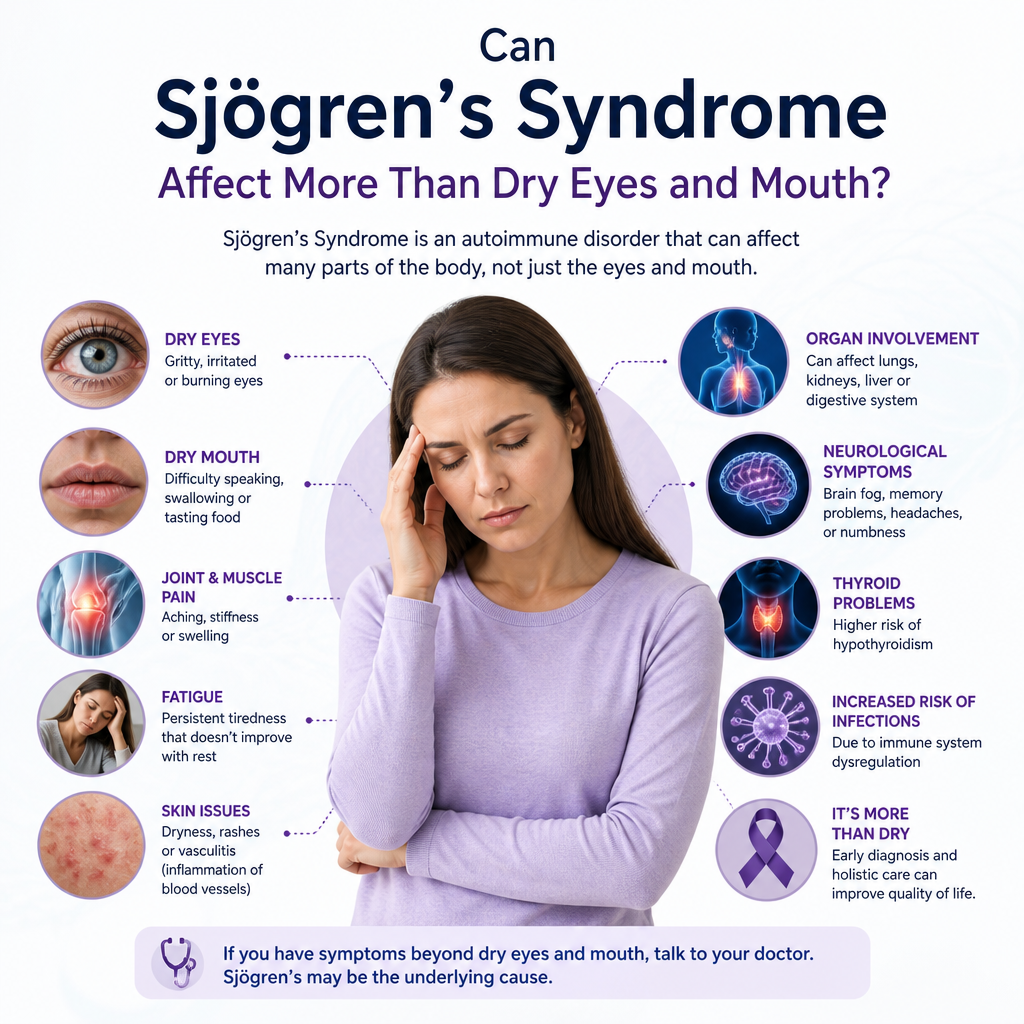
When people hear about Sjögren’s syndrome, they often think of just dry eyes and dry mouth. While these are the most common signs, this autoimmune disease can affect much more than tear glands and salivary glands. It is a systemic condition, which means it can involve other parts of the body too.
Understanding the wider impact of Sjögren’s disease is important for anyone living with a chronic illness or looking for better health awareness. In places like Nigeria, where access to reliable health information Nigeria can be limited, knowing the full range of Sjögren’s syndrome symptoms can help people seek care earlier.
What Is Sjögren’s Syndrome?
Sjögren’s syndrome is an autoimmune disorder. This means the immune system mistakenly attacks the body’s own tissues. In Sjögren’s syndrome, the immune system mainly targets moisture-producing glands, which leads to dryness. But the condition does not stop there.
There are two main forms:
- Primary Sjögren’s syndrome: occurs on its own
- Secondary Sjögren’s syndrome: occurs alongside another autoimmune condition such as rheumatoid arthritis or lupus
Because it is an autoimmune disease, symptoms can vary widely from person to person.
Beyond Dry Eyes and Dry Mouth
Yes, dry eyes and dry mouth are the hallmark symptoms. But Sjögren’s syndrome can also affect other body systems, causing discomfort and long-term health problems.
Common extra symptoms include:
- Fatigue
- Joint pain
- Dry skin
- Muscle aches
- Swollen glands
- Brain fog or trouble concentrating
- Vaginal dryness
- Numbness or tingling in the hands and feet
These symptoms may appear gradually, which is one reason Sjögren’s syndrome can be overlooked or mistaken for another condition.
Why Does Sjögren’s Syndrome Cause So Many Symptoms?
Because it is more than a gland problem. In an autoimmune condition like Sjögren’s syndrome, inflammation can affect the nerves, joints, lungs, kidneys, liver, and even blood vessels. This is why Sjögren’s syndrome symptoms can look different from one patient to another.
For example:
- In the joints, it may cause pain, stiffness, or swelling
- In the skin, it may lead to dryness or rashes
- In the nervous system, it may cause numbness or balance issues
- In the lungs, it may cause coughing or shortness of breath
- In the digestive system, it may lead to bloating or reflux
This wide range of effects is one reason why autoimmune health should never be taken lightly.
Possible Sjögren’s Syndrome Complications
If not diagnosed and managed properly, Sjögren’s syndrome complications can affect quality of life and overall health. Some people develop more severe problems beyond everyday dryness.
Complications may include:
- Eye damage from severe dryness
- Tooth decay and gum disease from lack of saliva
- Increased risk of oral infections
- Chronic pain and mobility issues from joint inflammation
- Lung, kidney, or liver involvement
- Nerve damage in some cases
- Increased risk of lymphoma, though this remains uncommon
These complications do not happen to everyone, but they show why regular medical follow-up matters.
Living With a Chronic Illness
Managing Sjögren’s syndrome often means treating symptoms while also watching for broader health changes. Since this is a chronic illness, care may involve different specialists over time, including eye doctors, dentists, rheumatologists, and primary care providers.
Helpful daily habits may include:
- Drinking water regularly
- Using artificial tears or eye drops as recommended
- Chewing sugar-free gum to stimulate saliva
- Moisturizing dry skin
- Resting when fatigue becomes severe
- Staying active with gentle movement for joint pain
- Going for routine dental and eye checkups
Small steps can make a real difference in comfort and long-term autoimmune health.
Sjögren’s Syndrome in Nigeria: Why Awareness Matters
Raising awareness about autoimmune disease Nigeria is important because symptoms are sometimes dismissed as stress, aging, or simple dehydration. But persistent dryness, fatigue, and joint pain deserve attention.
In communities where medical resources may be stretched, early recognition can help people get tested sooner and avoid complications. Trusted medical guidance from health professionals such as The Physicians can play a key role in improving diagnosis and care.
If someone has ongoing dry eyes, dry mouth, unexplained fatigue, or joint pain, it is worth discussing the possibility of Sjögren’s syndrome with a healthcare provider.
The Bottom Line
So, can Sjögren’s syndrome affect more than your eyes and mouth? Absolutely. It is a whole-body autoimmune disorder that can cause dry skin, fatigue, joint pain, nerve symptoms, and more. Recognizing the broader picture of this condition can lead to earlier diagnosis, better treatment, and fewer long-term problems.
If you or someone you know is living with symptoms that seem bigger than simple dryness, don’t ignore them. Understanding Sjögren’s syndrome is a meaningful step toward better health awareness and stronger lifelong care.